NASA's SpaceX Crew-13 Lifts Off From Florida for the Space Station
Four astronauts launched on a Falcon 9 at 11:10 a.m. EDT Thursday, heading for a six-month stay on the International Space Station after a weather-threatened morning.
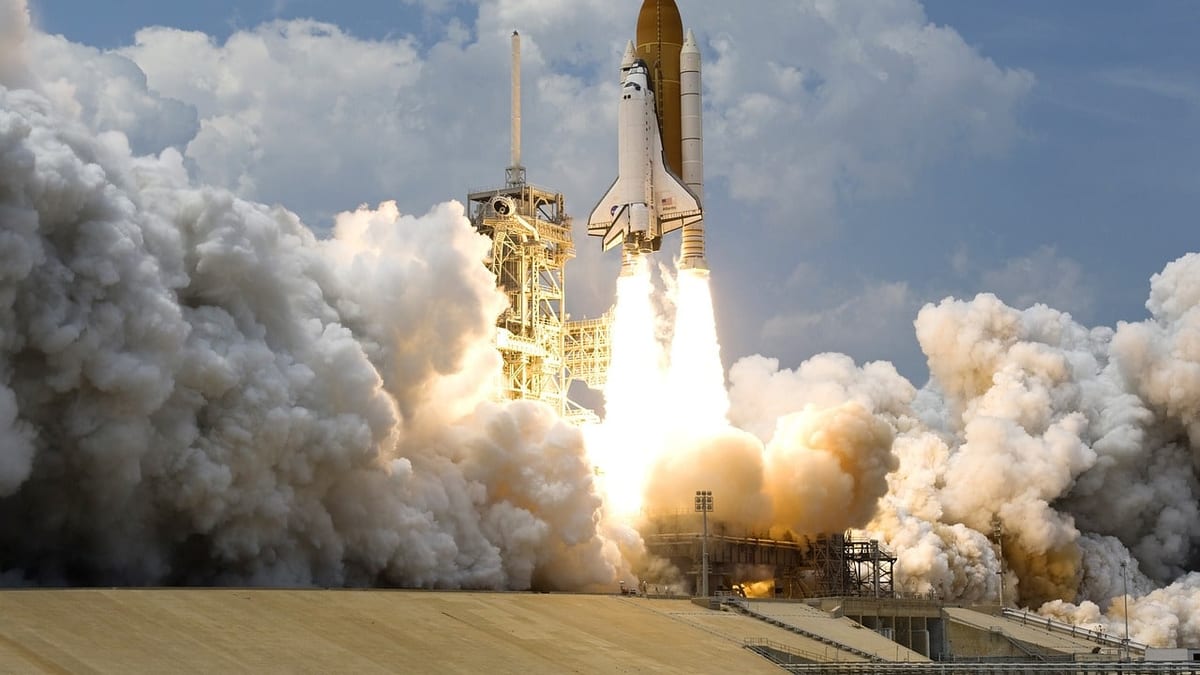
NASA's SpaceX Crew-13 mission launched from Florida on Thursday, Oct. 1, sending four astronauts toward the International Space Station. The Falcon 9 rocket lifted off on time at 11:10 a.m. EDT.
The booster also returned safely. WESH reported that the Falcon 9 first stage touched down at Landing Zone 40 after stage separation.
Who is on board
The crew flies aboard the Dragon capsule named Grace. NASA astronaut Jessica Watkins is the commander, and NASA astronaut Luke Delaney is the pilot. They are joined as mission specialists by Canadian Space Agency astronaut Joshua Kutryk and Roscosmos cosmonaut Sergey Teteryatnikov.
Spaceflight Now reports that Watkins will become the first NASA astronaut to fly twice on a SpaceX Dragon. She previously flew on Crew-4 in 2022. Delaney, a former test pilot chosen in the 2021 astronaut class, grew up in DeBary, Florida. He said watching shuttle launches helped inspire him.
A morning of weather uncertainty
Weather was a concern up to launch time. Spaceflight Now cited a 55% chance of acceptable conditions from the 45th Weather Squadron, with onshore Atlantic showers the main worry. WESH cited a 60% chance as of 11 a.m. The two reports differ slightly, but the launch went ahead on schedule.
Spaceflight Now lists the launch site as Space Launch Complex 40 at Cape Canaveral Space Force Station. WESH describes it as a launch from Florida's Space Coast.
What happens next
Docking was scheduled for about eight hours after liftoff. Spaceflight Now said that would be the shortest transit time ever for a Dragon. The sources do not yet confirm that docking has happened.
After arriving, the crew will join the Expedition 75 team for a six-month stay. They will support station maintenance and operations, run scientific research and test technology.
The science on the schedule
Much of the research looks at how the human body responds to long periods in microgravity. That work could help NASA protect astronauts on future trips to the Moon and Mars. Planned studies include:
- Venous Haemostasis: a NASA and European Space Agency study of how microgravity affects circulation, blood flow and clotting risk.
- Manual Piloting: a test of how well astronauts handle difficult lunar-landing simulations after months in space, and whether refresher training before landing helps.
- B-Complex: a trial of whether a daily B-vitamin supplement can reduce or prevent spaceflight-associated neuro-ocular syndrome, which can affect astronauts' vision.
- Standard Measures: collection of consistent physiological and behavioral data to set baselines for future research.
"Everybody's body is different," Delaney said, adding that researchers are still working to characterize many effects. He said he looks forward to helping document changes in the body, though he is less keen on the blood draws.
Background
WESH noted that Crew-12 launched on Feb. 13 to replace four crew members who cut their mission short because of a medical issue.
Keep it in Saved stories on this device to read later.